Sixteen Years of Continuous Implementation
EURECS is grounded in implementation rather than theory. The 2026 edition reflects practical experience accumulated through sixteen years of continuous engagement with electoral management bodies, governments, political parties, civil society organisations, regional organisations, European institutions and international partners.
Since its establishment in 2010, ECES has:
- Implemented more than 150 programmes across Africa, Europe, Asia, Latin America and the Middle East.
- Worked in over 70 countries, including 51 of the 55 Member States of the African Union.
- Mobilised more than €155 million, including over €113 million entrusted directly by the European Union.
- Reached over 800,000 stakeholders through training, coaching, leadership development, peer learning, civic education and institutional capacity building.
- Developed 22 copyrighted methodologies, management systems and digital applications, integrated into a single operational ecosystem.
- Maintained ISO 9001 certification, complemented by internationally recognised transparency, integrity and anti-bribery standards.
These figures are not presented as an end in themselves. They demonstrate that EURECS has been continuously tested, refined and strengthened through practical implementation across a wide range of political environments, institutional settings and democratic contexts.
More Than a Methodology
EURECS has evolved into the institutional doctrine of ECES. It provides a coherent framework through which electoral assistance is integrated with democratic governance, political processes, institutional resilience, leadership development, digital transformation and international cooperation. Rather than offering a rigid model, it provides a flexible architecture capable of adapting to different political realities while remaining anchored in universal democratic principles and European values.
Its purpose is not merely to improve elections. Its purpose is to contribute to stronger democratic institutions, more inclusive political processes and greater democratic resilience.
Download the EURECS Publications
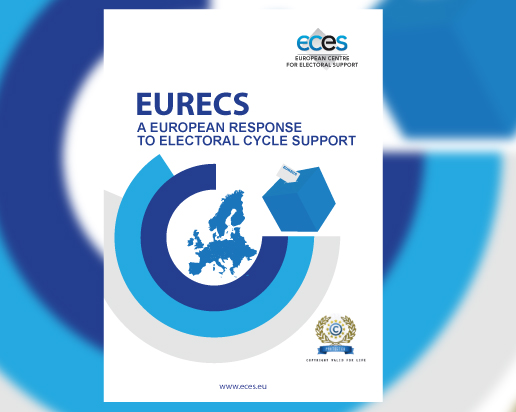
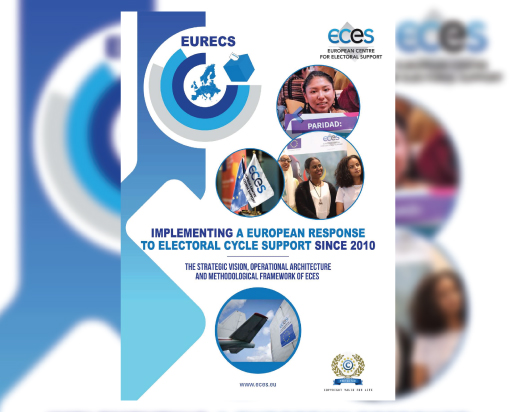
Download EURECS 2016 Download EURECS 2026
EURECS 2026 is also available in the following languages here below:
The two editions of EURECS should be read as complementary institutional references. The 2016 edition explains the origins and founding principles of the European Response to Electoral Cycle Support.
The 2026 edition demonstrates how sixteen years of implementation have transformed that original vision into the comprehensive strategic, methodological and operational framework that now guides every ECES intervention. Together, they document the evolution of an organisation that has consistently sought to strengthen democratic governance by combining European experience with national ownership, regional partnership and practical implementation.
They also reflect ECES’ continuing commitment to innovation, institutional learning and the belief that democracy support must constantly evolve to respond to the changing realities of the twenty-first century.