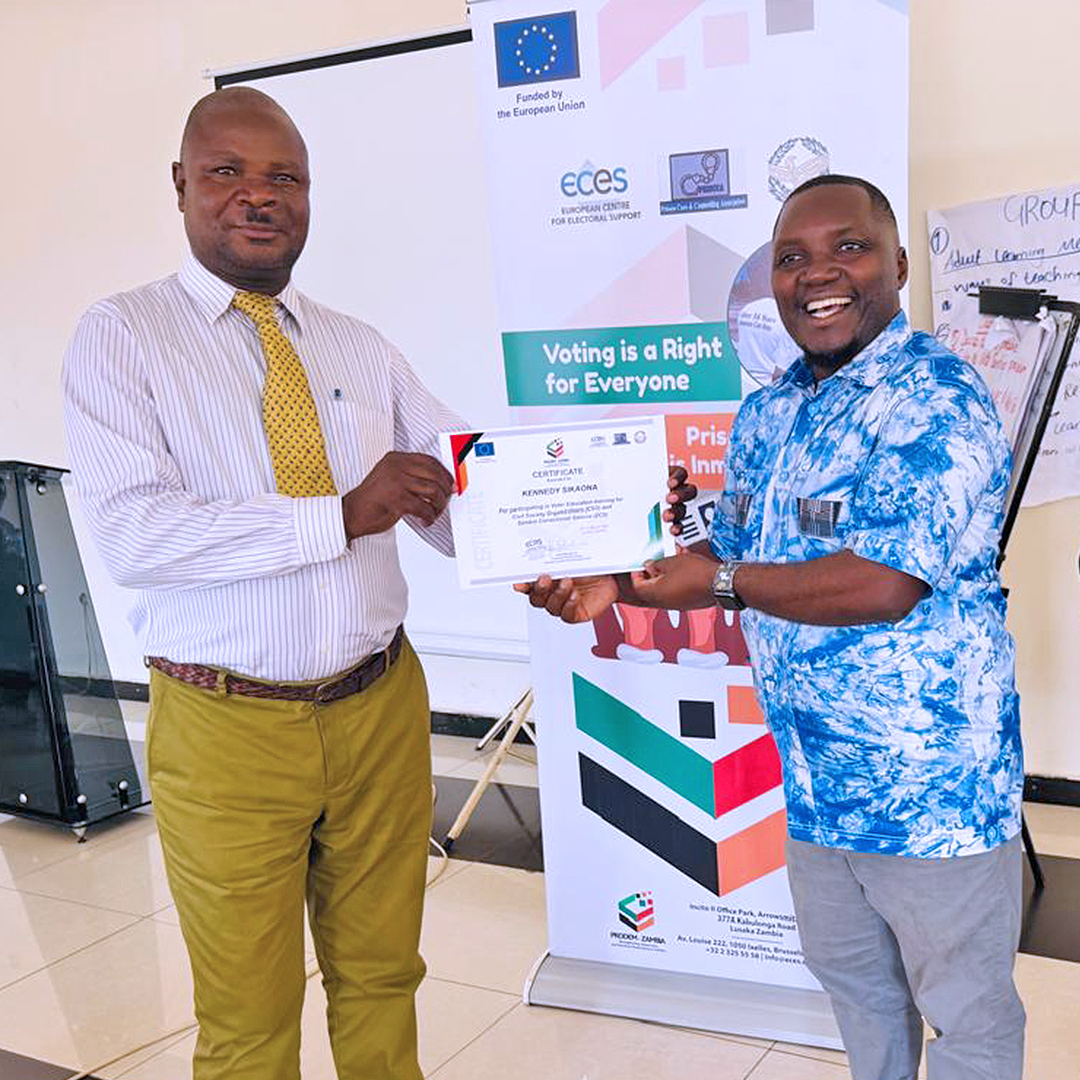
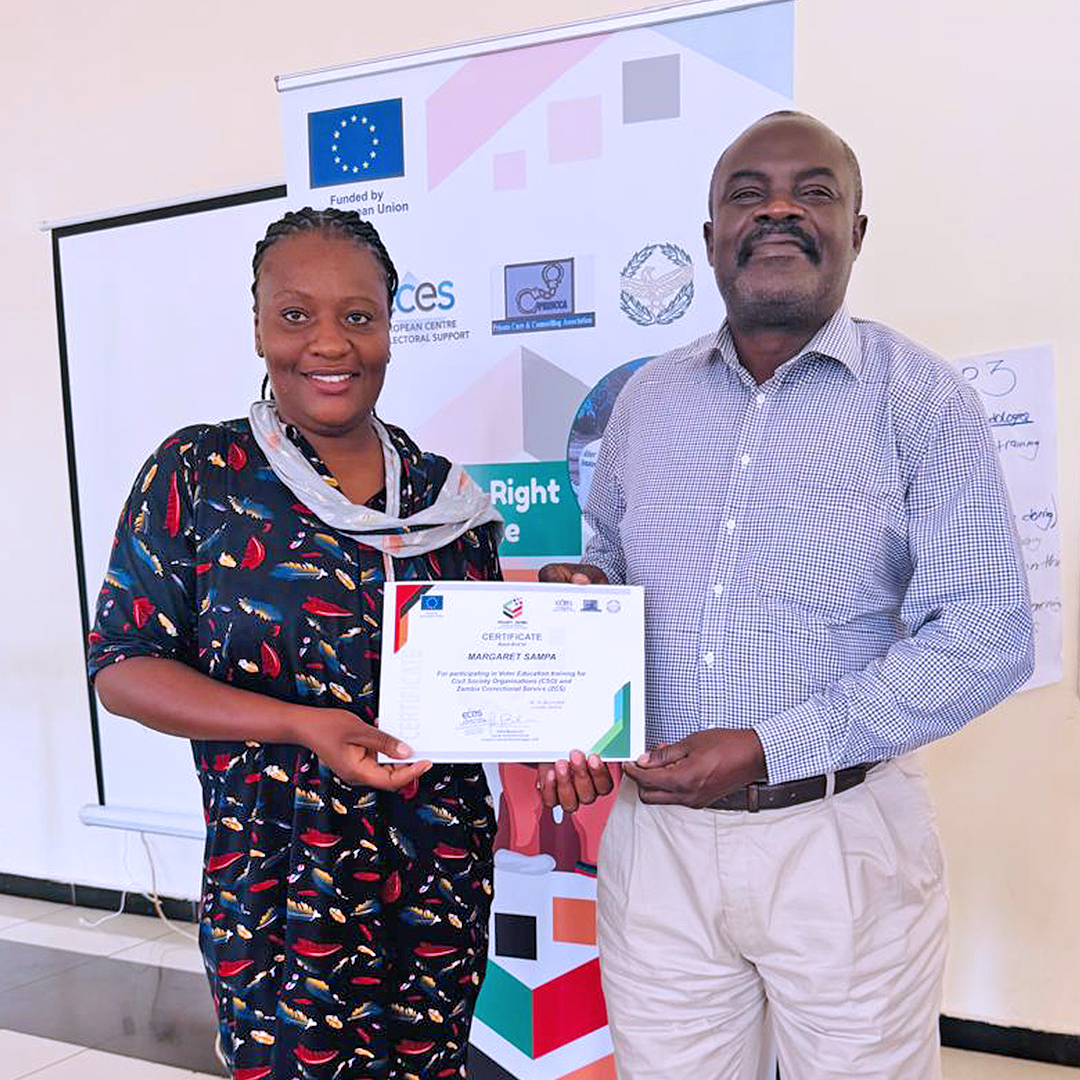
In the lead-up to Zambia’s General Elections scheduled for August 2026, the European Centre for Electoral Support (ECES), in partnership with the Prisons Care and Counselling Association (PRISCCA), the Electoral Commission of Zambia (ECZ), and the Zambia Correctional Service (ZCS), successfully delivered a two-day training on voter education in Lusaka.
This initiative forms part of the “Strengthening Democracy in Zambian Prisons (SDZP)” project, which aims to promote the effective participation of persons in lawful detention in the electoral process. It also contributes to broader efforts under the PRO DEM project to enhance inclusive electoral processes and democratic governance in Zambia.
The training brought together correctional officers, civil society organisations, and PRISCCA staff working in correctional facilities across several provinces. Participants engaged in a comprehensive programme designed to strengthen their understanding of voter education and equip them with the tools necessary to support electoral participation within correctional centres.
A key focus of the training was the recognition and promotion of prisoners’ right to vote, which is enshrined in Article 4 of the Zambian Constitution. As Zambia prepares for the 2026 elections, nearly 30,000 inmates are expected to be eligible to vote, marking a significant step forward in ensuring that no citizen is excluded from the democratic process.
Through expert-led sessions delivered in collaboration with the Electoral Commission of Zambia, participants explored the fundamentals of voter education, practical methodologies for outreach within correctional settings, and strategies to address challenges specific to this environment. The training also covered cross-cutting themes such as leadership, stakeholder coordination, and the promotion of peaceful electoral participation, including non-violent communication and mediation.
Importantly, the workshop fostered stronger collaboration between key institutions involved in electoral processes. By bringing together the Zambia Correctional Service, civil society actors, and electoral authorities, the activity contributed to building a coordinated approach to voter education in correctional centres, ensuring consistency, credibility, and sustainability of efforts.
The training adopted a participatory and learner-centred methodology, combining presentations, group work, and plenary discussions. This approach enabled participants to actively engage with the material, exchange experiences, and develop practical solutions tailored to their operational contexts.
As a result of the training, participants demonstrated an enhanced understanding of voter education principles and a clearer roadmap for implementing awareness-raising activities in correctional facilities. The initiative also identified concrete opportunities to strengthen outreach and ensure that eligible inmates are informed, prepared, and empowered to exercise their voting rights.
By supporting inclusive participation and reinforcing the legal recognition of prisoners’ voting rights, ECES and its partners are contributing to more transparent, credible, and inclusive elections in Zambia. Ensuring that persons in lawful detention can take part in the democratic process is not only a constitutional obligation but also a critical step toward strengthening democratic legitimacy and social reintegration.
As the country moves closer to August 2026, continued efforts in voter education and stakeholder coordination will be essential to ensure that this newly recognised constituency is fully integrated into Zambia’s democratic life.