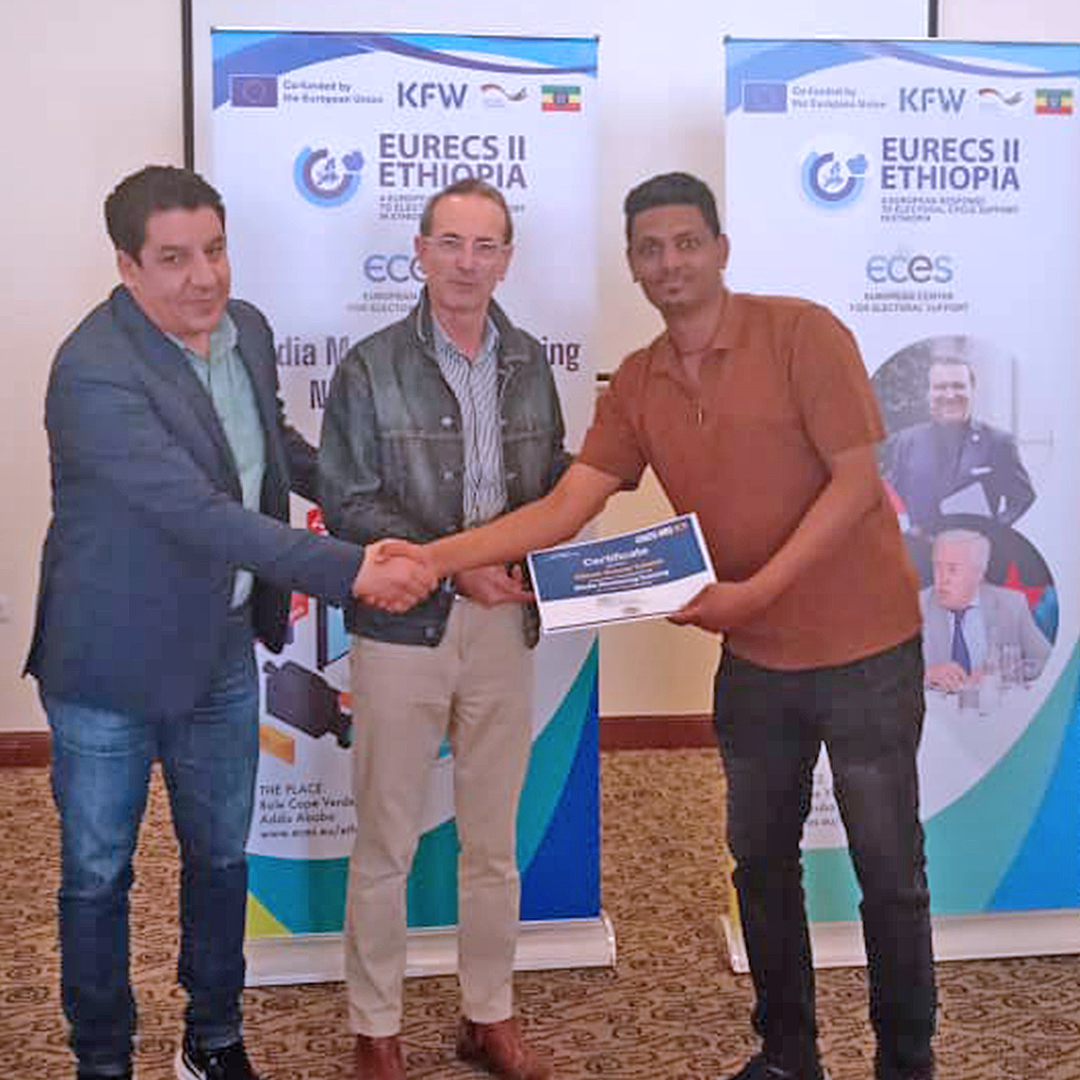
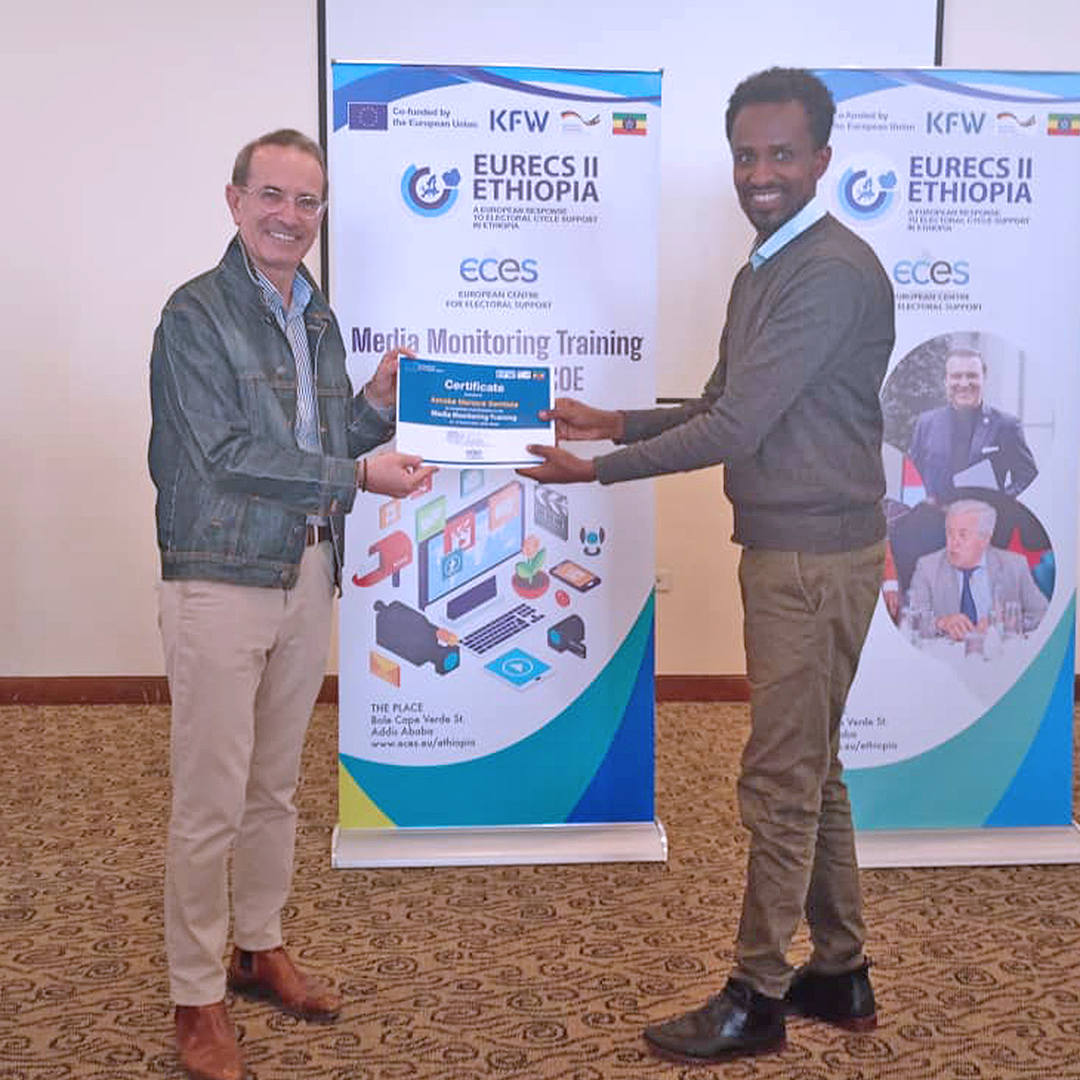
Previously last week in Addis Ababa, we delivered a two-day training for media monitors, bringing together participants from the National Election Board of Ethiopia (NEBE) and the Coalition of Ethiopian Civil Society Organizations for Elections (CECOE).
Organized within the Ethiopia project, this initiative was made possible thanks to the support of the European Union and the German government through KfW Development Bank.
The training reinforced collaboration between electoral institutions and civil society in safeguarding the integrity of the electoral process, contributing to ongoing efforts to promote transparent, credible, and inclusive elections in Ethiopia.
A key component of the project focuses on supporting NEBE in establishing and operationalising a Media Monitoring Unit (MMU), tasked with systematically monitoring national and regional media across multiple platforms—including television, radio, print, online outlets, and social media—throughout the electoral cycle. The information generated by the MMU plays a critical role in strengthening communication strategies, identifying emerging risks, and promoting responsible election reporting.
The training aimed to enhance the capacity of media monitors to conduct professional, systematic, and impartial analysis of media coverage related to electoral processes. Participants were introduced to key principles of media monitoring, as well as methodologies and tools for analysing both traditional and digital media environments.
Through expert-led sessions, case studies, and practical exercises, participants developed skills to assess political pluralism in media coverage, measure airtime and visibility of political actors, and identify key narratives shaping public discourse. Particular attention was given to detecting misinformation, disinformation, and hate speech, as well as monitoring content that may incite violence or contribute to electoral tensions.
The training also addressed the challenges posed by the rapidly evolving digital information landscape. Dedicated sessions on social media monitoring equipped participants with techniques to track online narratives, analyse trends, and assess user-generated content, strengthening their ability to respond to emerging risks in real time.
In addition to strengthening analytical skills, the programme focused on improving participants’ capacity to produce structured and evidence-based media monitoring reports. Sessions on data analysis and reporting provided practical guidance on organising monitoring data, interpreting both quantitative and qualitative indicators, and presenting findings clearly and effectively.
Adopting a participatory and hands-on methodology, the training combined theoretical inputs with simulation exercises and real-life case studies from Ethiopian and international electoral contexts. This approach ensured that participants could translate knowledge into practice and apply newly acquired skills in their respective roles.
By strengthening the capacity of both NEBE and CECOE media monitors, the initiative contributes to enhancing transparency, accountability, and trust in electoral processes. It also reinforces early warning mechanisms for identifying risks related to misinformation, hate speech, and electoral tensions—key elements in promoting peaceful elections.
As Ethiopia continues its democratic consolidation process, initiatives such as this training play a crucial role in ensuring that media coverage of elections remains balanced, responsible, and conducive to an informed electorate. Through its continued engagement, ECES supports resilient electoral institutions and an environment that upholds democratic principles.